Custom Collections
A range planned as one commercial system — SKU architecture, one material platform, one hardware family and a delivery split written into the calendar.
A custom collection is a group of bags and small goods planned together as one commercial system: the SKU count, the price ladder, the shared material and hardware platform and the delivery split across drops. Each style carries a 500-piece minimum per colourway. Sampling runs 6–10 working days per style, 12–15 where custom hardware is tooled; bulk takes 35–50 days after the pre-production samples are sealed. Every lot releases on AQL 2.5, ISO 2859-1, general level II, FOB Xiamen.
Programme parameters at a glance
| Parameter | Commitment |
|---|---|
| Minimum order quantity | 500 pieces per style / colourway |
| Sampling lead time | 6–10 working days (12–15 days for complex constructions) |
| Bulk production lead time | 35–50 days after sample approval |
| Inspection standard | AQL 2.5 (ISO 2859-1), single sampling, general level II |
| Incoterms | FOB Xiamen — EXW, CIF and DDP available on request |
| Payment terms | T/T 30% deposit / 70% before shipment; L/C at sight for container loads |
| Verified production floor space | 4,950 m² (SGS-verified) |
| Team | 137 staff across 7 production lines |
| Equipment | 149 machines including computerised saddle-stitch and edge-painting units |
| Monthly capacity | 200,000 pieces |
| Entity | Founded 2014; principal has worked in bag development since 2004 |
Season Planning and the Range Calendar
A collection fails on calendar long before it fails on design. Work backwards from the launch date and the arithmetic is unforgiving: bulk occupies 35 to 50 days, inspection and packing three to five, sea freight 25 to 35 days to northern Europe or the North American west coast, or five to eight days by air. Sampling and approvals sit in front of all of that, which puts the start of development somewhere near nine months before the floor date for a first range.
| Milestone | Weeks before launch | Output | Decision locked |
|---|---|---|---|
| Concept and SKU architecture | 36 | Style list, price ladder, size ladder, target volumes | Range size and tier structure |
| Material platform agreed | 30 | Primary and secondary leather or fabric, lining family | Colour story and costing base |
| Hardware family agreed | 28 | Lock, puller, feet and plate finishes; custom items identified | Tooling commitments |
| Hero style prototypes | 24 | Two or three leading silhouettes built and reviewed | Construction method and shared components |
| Supporting style prototypes | 20 | Remaining styles built against the settled platform | Pattern corrections across the range |
| Pre-production samples | 16 | Full range in bulk materials, sealed as the reference | Sign-off to release bulk |
| Bulk and inspection | 10 | Production across seven lines, AQL 2.5 release | Carton specification and freight booking |
Second seasons are much faster because the platform already exists. Where the leather family, the hardware family and the colour standard are unchanged, the calendar compresses to roughly five or six months — the material and tooling decisions that occupy the front third of a first range simply do not have to be made again.
The bottleneck in most first ranges is not sampling; it is approval. A prototype sitting on a buyer's desk for three weeks costs more calendar than the six to ten working days it took to build. We recommend a single named approver per range and a fixed review window per round, because a collection with twelve styles and four decision-makers will reliably lose a season to indecision rather than to development.
SKU Structure and Size Ladders
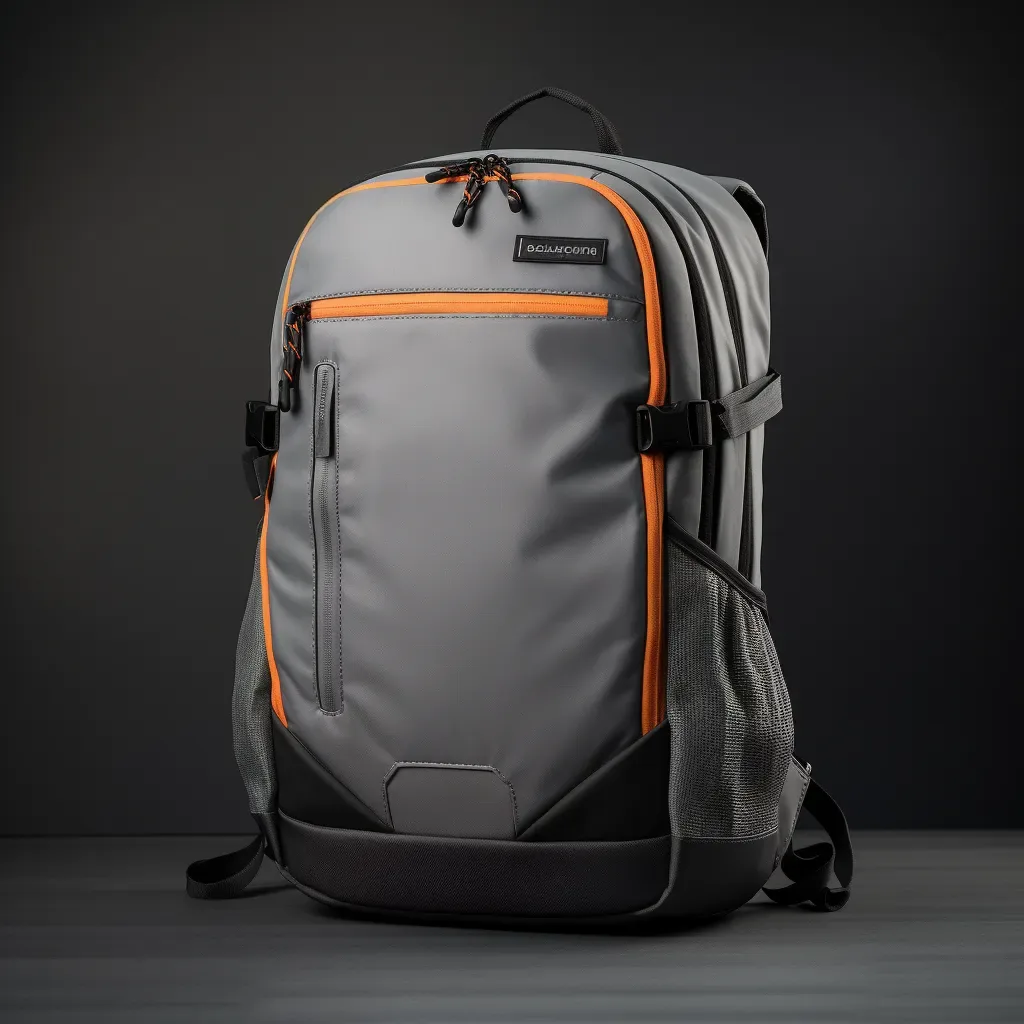
Range architecture is a decision about attention as much as about budget, and attention is the scarcer resource on a crowded floor or a busy category page. A shopper shown eighteen near-identical styles buys nothing; a shopper shown three clear tiers with one obvious hero buys the middle one. Most first ranges work at six to twelve SKUs built from two or three silhouettes, extended by size and colour rather than by adding new patterns.
| Range tier | SKU count | Share of volume | Role in the range |
|---|---|---|---|
| Hero | 1–2 | 30–40 per cent | Carries the identity; this is where custom hardware and the best leather are spent |
| Core | 3–5 | 40–50 per cent | Repeatable silhouettes held across seasons; they fund the range |
| Entry | 1–3 | 15–25 per cent | Accessible price points, usually small goods, driving first-time purchase |
| Statement | 1 | 5–10 per cent | Low volume, high visibility; exists to be photographed, not to sell |
A capsule and a season are different commercial instruments, and confusing the two is a common and expensive first-season mistake. A capsule is four to six styles built for one moment, sold through quickly and not repeated; it justifies distinctive hardware and unusual materials because the risk is contained. A season is built to be repeated, which means the platform has to be re-sourceable two years later — a consideration that rules out some of the more interesting material choices and is better accepted early than discovered at reorder.
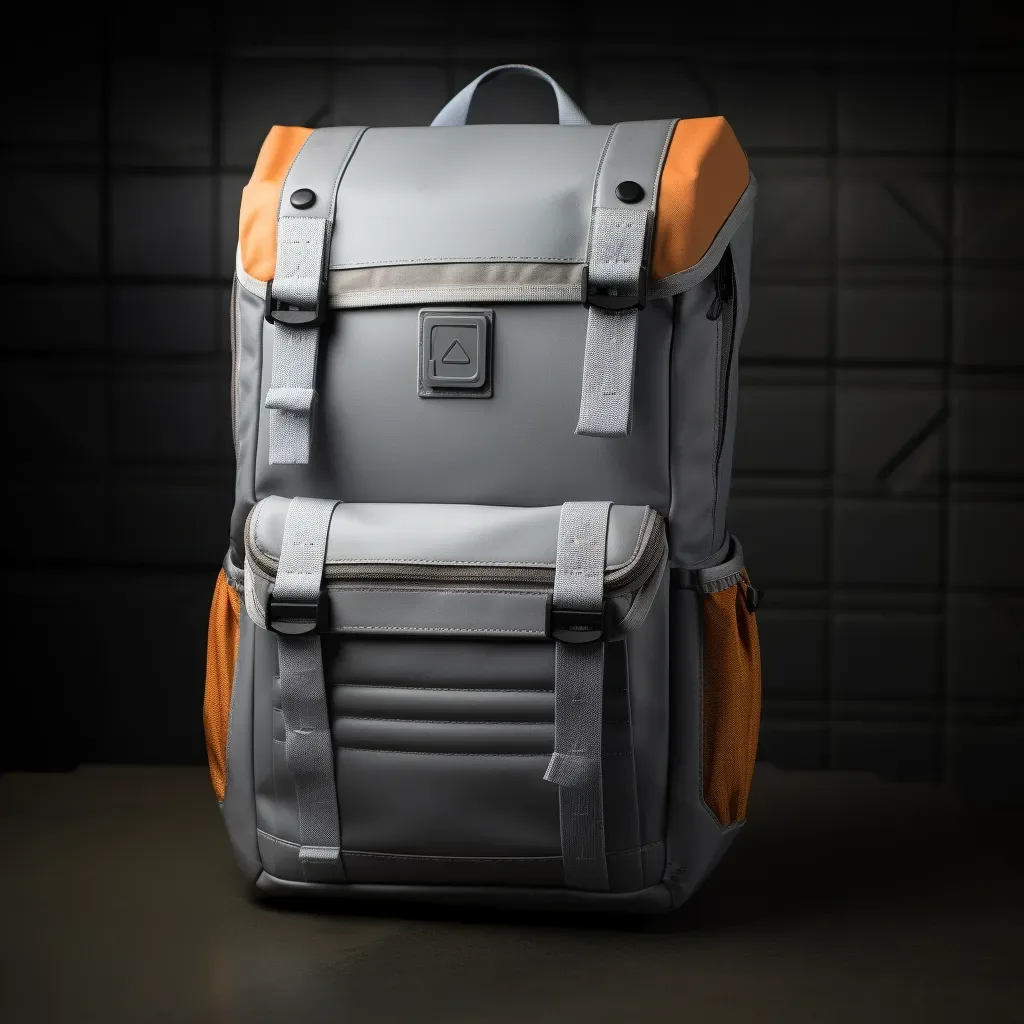
Size ladders do the extension work instead of new patterns. A silhouette offered in mini, midi and full formats shares one construction method, one hardware set and one pattern family, with the panel geometry scaled rather than redrawn. Three sizes of one silhouette costs far less to develop than three separate silhouettes, and it reads as intentional on a shelf.
SKU coding deserves five minutes at the architecture stage and saves weeks later. A style code, a size code and a colourway code held consistently across the range means a reorder can be placed from a spreadsheet line rather than from a photograph, and it prevents the common failure where two colourways of one silhouette are ordered under the same reference by different people. The coding scheme is agreed with the range plan and used on every document afterwards.
One Colour Story, One Hardware Family
Two decisions give a collection its identity, and both are taken before any single style is drawn. Everything downstream of them is variation; nothing downstream of them should reopen the question. The colour story is a set of four to six referenced shades applied across leather, fabric, lining, thread, webbing, edge paint and print, approved as lab dips and retained as a physical standard. The hardware family is one lock, puller and feet design in one finish, reused across every style, with custom pieces reserved for the hero.
- Lab dips approved once — a dip loop runs 7 to 10 days per shade, and the approved physical standard is what later drops are matched against.
- One hardware family — a single lock, puller and feet design reused across the range, with one or two custom pieces reserved for the hero style.
- Branding matrix — one document fixing mark size, position and method per style, so a tote and a card wallet carry the mark at comparable visual weight.
- Lining and print family — one lining design and one jacquard label family applied across the collection, rather than per-style artwork.
- Packaging identity — dust bags, boxes, care cards and barcodes developed once for the whole range and applied to every style.
A referenced number is a starting point, not a standard. Two suppliers dyeing to the same reference will produce shades that match under one light and diverge under another, which is why the approved physical dip — not the reference number — is what later drops are matched against. Where a range spans leather, fabric, lining and webbing in one shade, each material gets its own approved dip, because a single dip cannot represent four different surfaces.
Split Deliveries and Drop Scheduling
Few brands want a full season arriving in one container. Splitting delivery solves three problems at once: it stages cash, it lets a hero drop before the supporting styles, and it matches retail floors that take newness in waves rather than all at once. The cost is that each drop is inspected and shipped separately, so the split has to be written into the order rather than decided at the warehouse door.
- Decide the drop structure at order placement — a two-drop split commonly runs 60/40, a three-drop split around 40/35/25.
- Sequence the drops so the hero and the core arrive first; entry and statement pieces follow.
- Confirm that each drop clears the 500-piece floor per style and colourway before committing the split.
- Book freight per drop rather than per season, with carton data confirmed before each booking.
- Hold the sealed reference against the whole season so the third drop matches the first.
- Plan air freight for the opening drop where the launch date is immovable, and sea for the balance.
Budgeting a Multi-Style Programme
Development cost on a collection is front-loaded and mostly fixed: pattern work per style, tooling for any custom hardware, lab dips per shade and a prototype round per style. Unit cost is where the range structure pays back, because a shared leather lot, a shared hardware family and a shared colour standard reduce both material intake and the number of approvals. A twelve-SKU range built on one platform typically develops for materially less than twelve independent styles.
The other budget lever is volume concentration. Because the floor applies per style and per colourway, a range of twelve styles in four colourways is forty-eight lines before any shared platform is considered. Concentrating colourways — four shades on the hero, two on the supporting styles, one on the statement piece — usually halves the number of lines without visibly thinning the range.
Sampling cost is the one line item buyers most often underestimate on a collection, because it multiplies by style and because it falls entirely before any revenue does. A twelve-SKU range is twelve prototype rounds, and each round carries pattern work, cutting and finishing regardless of how small the piece is. Budgeting sampling as a per-style line rather than a single project figure is the difference between a range that is costed and one that overruns before bulk has started.
Governance: Sealed References, Reorders and Change Control
A collection running across multiple drops needs a rule for change. Ours is simple: nothing changes inside a season once the pre-production samples are sealed, because a change made on drop two will not be reflected in drop one and the range will not match on the floor. Requests are logged and applied to the following season instead.
- Sealed reference per style — a pre-production sample held for every style, so later drops are built against a physical object rather than a drawing.
- Retained colour standard — approved lab dips held so a shade introduced in a later season matches what is already in market.
- Cross-style consistency check — colour, emboss depth and hardware finish compared between styles before any drop is released.
- Change log — requested modifications recorded during the season and implemented at the next drop or next season, never mid-run.
- Compliance file — REACH (EC) 1907/2006 and CPSIA declarations, with OEKO-TEX Standard 100 linings and LWG-sourced leather on request.
- Production floor — an SGS-verified 4,950 m² site in Quanzhou, Fujian running 7 lines and 149 machines with 137 staff and 200,000 pieces of monthly capacity.
Writing the Range Brief
Almost every difficulty a collection runs into later can be traced to something absent from the brief. A range plan held only in a buyer's head works while that person is in the room and stops working the moment a decision has to be made without them. The document does not need to be long; it needs to contain the decisions that would otherwise be re-litigated, written down once, in a form both sides can point at.
| Brief section | What it records | What it prevents |
|---|---|---|
| Commercial frame | Launch date, price ladder, target volume per tier, channel | A range optimised for the wrong margin or the wrong floor date |
| SKU list | Every style with its size and colourway codes | Two colourways of one style ordered under the same reference |
| Material platform | Leather or fabric family, lining, thread, edge finish, per style | A range that cannot be re-sourced in a second season |
| Hardware schedule | Which components are stock, which are custom, and the finish | Tooling discovered late, when it becomes the critical path |
| Branding matrix | Mark size, position and method per style | A card wallet carrying a mark scaled for a tote |
| Approval route | One named approver and a fixed review window per round | Three weeks of calendar lost to an unowned decision |
| Delivery split | Drop structure, quantities and freight mode per drop | A split decided at the warehouse rather than at order placement |
Two entries in that table are worth more than the others, and both are routinely left until the range is already moving. The approval route is the one that most often decides whether a season lands, because development time is rarely the constraint and decision time almost always is. The hardware schedule is the one that most often decides cost, because a custom component identified late arrives after the leather has been bought and becomes the reason bulk slips.
One further entry deserves a place even though it is not a decision: a list of what the range is explicitly not doing. Naming the categories, the price points and the materials that are out of scope stops the slow expansion that turns a twelve-SKU plan into nineteen by the third approval round. Range creep is rarely authorised; it accumulates through small additions that each seem reasonable alone, and the brief is the only place it can be stopped cheaply, because by the third approval round every addition has a pattern and a prototype behind it and removing it feels like waste.
Category Mix: Where Small Goods and Travel Fit
A bag-only range leaves two commercial jobs undone. It has no accessible price point, so a first-time customer has nothing to buy into the brand with, and it has no occasion beyond the everyday, so the brand is absent from travel and gifting. Small goods and travel pieces fill both, and because they share the leather lot and the hardware family they cost far less to add than their SKU count suggests.
| Category | Commercial job | Where it sits | Development cost |
|---|---|---|---|
| Structured handbag | Carries the identity and the highest margin | Hero and core tiers | Highest; pattern and construction work dominates |
| Small leather goods | Accessible entry price, gifting, repeat purchase | Entry tier | Low once the leather and hardware are settled |
| Travel and duffel | Occasion coverage, larger basket, luggage adjacency | Core tier, usually one or two styles | Moderate; hardware and load paths add work |
| Business and laptop | Weekday use, corporate and gifting channels | Core tier | Moderate; structure and organisation drive cost |
| Evening and occasion | Visibility, press and editorial imagery | Statement tier | Low volume, disproportionately high sampling effort |
The sequencing rule is to add categories from the settled platform outward. A card wallet built on an approved leather and an approved hardware finish is a low-risk addition; a travel piece introduced before the hardware family is settled is not, because it demands load-bearing decisions the rest of the range has not yet made. Adding the easy category first also gives the range an entry price point early, which is useful if the season has to be sold to a retail buyer before it is finished.
Proportion matters more than coverage. A range of twelve SKUs with eight bags and no small goods reads as a bag brand that has not thought about its customer's first purchase; one with six bags, four small goods and two travel pieces reads as a collection. The exact mix depends on the price ladder, but a useful test is whether someone who likes the range but cannot afford the hero has anything to buy.
Travel deserves one caution. It is the category most likely to expand after it is introduced, because each piece suggests an adjacent one — a duffel suggests a weekend bag, a weekend bag suggests a garment sleeve. That expansion pulls volume away from the core tiers and adds hardware decisions the rest of the range has not made. Capping travel at one or two styles in a first range is usually the right discipline, and the adjacent pieces are better held for a second season when the platform can absorb them.
Validating a Range Before Committing to Bulk
A collection represents a large commitment against a set of assumptions that have not yet been tested: that the price ladder works, that the hero is the right hero, and that the colour story is the one the customer wants. Those assumptions can be checked before the full order, and checking them costs a fraction of discovering them wrong after 6,000 pieces have been cut.
- Run a pilot on the hero only — a small-batch quantity of the leading style tests construction, price acceptance and colour without committing the supporting pieces.
- Show the range as a sealed set — pre-production samples of every style displayed together reveal inconsistency that individual approvals never surface.
- Test the price ladder, not just the price — present hero, core and entry together, because a ladder with too narrow a gap cannibalises the hero.
- Confirm the colour story under retail lighting — a shade approved under office light behaves differently on a shop floor, and it is cheaper to adjust a dip than a season.
- Validate the entry price point first — if the accessible piece does not convert, the rest of the range has no funnel feeding it.
The cost of this stage is real and it sits entirely before revenue, which is why it is tempting to skip. Set against it is the cost of a season that lands and does not sell, which is larger by an order of magnitude. Where the budget cannot support both a pilot and the full range, the pilot is the one to keep, because it converts the largest assumption in the plan into a fact.
Validation also has a calendar consequence that is worth planning around rather than discovering. A pilot adds its own sampling and production window in front of the season, which means either the development start moves earlier or the pilot runs on styles that were going to be sampled anyway. The second option is usually available: the hero style needs a prototype regardless, so building a small sellable quantity from that same round costs only the material and the line time, not a second development cycle.
What a pilot cannot do is rescue a range whose commercial frame is wrong. It tests whether the hero and the price point work; it does not test whether the launch date, the channel or the volume assumption were realistic. Those are settled earlier and in writing, and where they look uncertain the honest answer is usually to reduce the range rather than to validate it, because a smaller season that lands is worth more than a full one that arrives late to a channel that has already moved on.
Reviewing a Season and Planning the Next
The value of a second season is largely determined by what was recorded during the first. Most brands close a season on a sales figure and then rebuild the next range from memory, which means the same arguments are had again and the same mistakes are available to repeat. A short written review, taken while the season is still on the floor, is what turns experience into a faster and cheaper second range.
| What to record | Why it matters next season | When to capture it |
|---|---|---|
| Sell-through by tier | Shows whether the volume split was right | At mid-season, not at closeout |
| Which sizes sold out first | Sets the size ladder proportions | Continuously, from the first drop |
| Colour performance by style | Decides which shades return | At the end of the first drop |
| Return and defect reasons | Separates product faults from expectation gaps | Monthly through the season |
| Which approvals slipped | Identifies the real calendar constraint | Immediately after launch |
| Platform elements reused | Shows where development cost can be avoided | During range planning |
Two findings from that table drive most second-season decisions. Colour performance decides which shades return, and it is usually more concentrated than expected — a range planned with six shades often sells most of its volume in three. Approvals that slipped identify the genuine calendar constraint, which is almost never the building. A brand that records both enters the next season with a shorter calendar and a tighter colour story, which is the cheapest available improvement, and it is available to any brand willing to write six lines down while the season is still trading. The review is also the right moment to decide which platform elements are worth carrying forward and which should be retired, because that decision is far harder to make once the next range is already being drawn.
Brief a collection programme
Send the launch date, the price ladder and the target volumes. We will return an SKU architecture, a costed calendar and a delivery split.
Frequently Asked Questions
How many weeks before launch should development start on a first collection?
Around thirty-six. Bulk occupies 35 to 50 days, inspection and packing three to five, and sea freight 25 to 35 days to northern Europe or the North American west coast, so the production and transit tail alone is close to four months. Sampling, lab dips, hardware tooling and approvals sit in front of that, which is where the remaining months go.
How should volume be split across hero, core and entry styles?
A workable structure puts 30 to 40 per cent of volume into one or two hero styles, 40 to 50 per cent across three to five core silhouettes, and 15 to 25 per cent into entry price points. A single statement piece at 5 to 10 per cent is optional; it exists to be photographed rather than to sell, and it should not be given production weight.
Does a size ladder cost less than three separate silhouettes?
Yes, considerably. Mini, midi and full formats share one construction method, one hardware set and one pattern family, with panel geometry scaled rather than redrawn. Three sizes of one silhouette need one prototype round plus scaling checks; three separate silhouettes need three pattern developments and three rounds of correction.
How many colourways should a first season carry?
Four to six referenced shades across the whole range, concentrated unevenly. Four on the hero, two on the supporting styles and one on the statement piece is typical, because the floor applies per style and per colourway and an even spread across every style multiplies the number of lines without visibly thickening the range.
Can a hardware family be shared across bag and small goods categories?
Yes, and it should be. One lock, puller and feet design in one finish reused across a tote, a backpack and a card wallet gives the collection a recognisable identity and reduces tooling commitments. Custom hardware is best reserved for a single hero style, where the additional cost is most visible to the customer.
What is a sensible split across multiple drops?
Two drops commonly run 60/40 and three drops around 40/35/25, with the hero and the core in the first drop so a range opens with its strongest pieces. Each drop is inspected and shipped separately, and each must clear the per-style minimum, so the split is decided at order placement rather than at the warehouse.
Can a change be made after the first drop has shipped?
Not inside the season. Once the pre-production samples are sealed, changes are logged and applied to the following season or to the next drop only if the change can be reflected across every drop already shipped. A change applied to drop two alone leaves the range mismatched on the floor, which is usually worse than the problem the change was meant to solve.
How is consistency checked across styles before a drop is released?
Alongside the standard AQL 2.5 inspection under ISO 2859-1, collection programmes add a cross-style comparison. Colour, emboss depth and hardware finish are compared between styles side by side, because a range in which every piece individually meets its own specification can still look inconsistent when the pieces are displayed together.
How much faster is a second season once the platform exists?
Roughly five to six months against nine for a first range. The leather family, the hardware family and the colour standard do not have to be re-specified, lab dips do not need a fresh approval loop for existing shades, and tooling already exists. What remains is new pattern work and a prototype round for whatever is actually new.
Should the opening drop travel by air?
Where the launch date is immovable, yes — air freight runs five to eight days against 25 to 35 by sea, and the premium is usually cheaper than a missed floor date. The usual pattern is to fly the opening drop and send the balance by sea, which is why the drop split is worth deciding at order placement.
What belongs in a range brief?
Seven things: the commercial frame, the SKU list with its coding, the material platform, the hardware schedule, the branding matrix, the approval route with one named approver, and the delivery split. The last two are the ones most often omitted and the ones most often responsible for a missed season, because decision time and tooling lead time are the genuine constraints.
Why add small goods to a bag range?
Because a bag-only range has no accessible entry price and no gifting occasion, so a customer who likes the brand but cannot afford the hero has nothing to buy. Small goods share the leather lot and the hardware family, so they cost far less to add than their SKU count suggests, and they are usually the first pieces to convert a new customer.
Is a pilot run worth the extra unit cost?
Usually yes, particularly on the hero style. A small-batch quantity tests construction, price acceptance and colour before the full order is committed, and it converts the largest assumption in the plan into a fact. Where the budget cannot cover both a pilot and the full range, the pilot is the one to keep.
What should be recorded during a season for the next one?
Sell-through by tier, which sizes sold out first, colour performance by style, return and defect reasons, which approvals slipped, and which platform elements were reused. Captured mid-season rather than at closeout, that record shortens the second calendar and tightens the colour story, which is the cheapest improvement available.